In a constantly evolving world where connectivity and technology are redefining the way we interact…
What Is Facial Recognition and How Does It Work?
The technological revolution has given rise to several tools with different purposes. Among these tools is facial recognition. This system is increasingly used in a variety of fields because of its many benefits. If you would like to learn more about this rapidly expanding technology, this article is for you.
The origins of facial recognition
The first attempt at facial recognition dates back to 1973, as part of doctoral research at Kyoto University. It took several decades for Facebook to develop a facial recognition system accessible to everyone. This happened on June 7, 2011. However, following widespread criticism of the service, the project was abandoned in Europe on September 22, 2012.
Having not abandoned the idea of facial recognition, Facebook later embarked on a revolutionary project: DeepFace. This project was launched in 2015. Using a system composed of a set of neural networks, it can identify people in photos by matching them to faces. The project also owes its effectiveness to intensive training.
Various studies in the field have enabled the technology to develop and expand into different areas. In 2019, the general public learned about a system that could be used on mobile phones. Thanks to its various benefits, this system is now used in several fields, including security.
What is facial recognition?
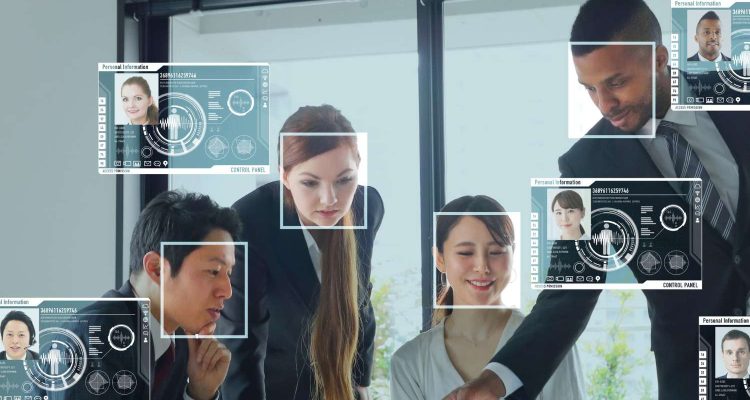
Facial recognition is a biometric technology powered by algorithms. It analyzes the different features of a person’s face after they have been photographed or filmed. These images are then compared with data stored in a database. Facial recognition is used for two different purposes. First, authenticating a person.
In this case, the system verifies a person’s identity. It is also used to identify a person.
Using this system, a person in a group can be easily targeted and located. Facial recognition is therefore closely linked to a person’s identity. It is sometimes incorrectly confused with facial detection technology.
The different use cases for facial recognition
Because of the various purposes it serves, facial recognition is used in many fields.
- Social media
This system is used by networks such as Facebook. When a photo is uploaded, the application suggests a list of people who may appear in it. It relies on an algorithm that uses images in which people have previously identified themselves.
- Identity verification
This is a system you have probably already used. Through identity verification, some applications and websites can check their users’ identities. This enables them to provide secure access to their accounts. Beyond websites and applications, many devices are equipped with this system, including certain cars, smartphones, computers and video game consoles.
This system also restricts third parties’ access to the items mentioned above.
- Security
The primary purpose behind the creation of facial recognition technology was security. It therefore plays a major role in this field. Before certain operations, the facial recognition system verifies a person’s identity. For example, it is sometimes used to determine whether a person is wanted before allowing them to board an aircraft.
The system is also used at certain airports to verify the identities of people entering a country. It can also confirm that a person is indeed the holder of an identity document.
- Monitoring by security forces
The system is also used by security forces, which use it for surveillance. The NSA and FBI have notably developed their own facial recognition systems.
How does facial recognition work?
The simplest facial recognition process is the one used to unlock a smartphone (Face ID). This system does not compare a person’s identity with an entire database. Instead, it confirms whether the person’s face matches a single pre-registered photo. If the faces match, you can access the device. If they do not, access is denied.
In addition to phone-based facial recognition, there is another type of system. It compares the faces of people passing in front of a camera with photos of people stored in a database. The photos stored in this database come from a variety of sources, including social media.
However, in both of the cases described above, facial recognition follows the same process. This involves:
- Face detection.
The camera detects and captures a person’s face. The face may be captured from the front or in profile.
- The analysis phase
The image is then analyzed and compared using 2D or 3D technology. The system’s facial analysis focuses primarily on facial geometry, determining the differences between the various points on the face.
- The face conversion stage
The information collected is converted into a mathematical formula. These formulas correspond to facial signatures that, like fingerprints, are unique.
This signature is added to the database to find a match.

Related Posts